

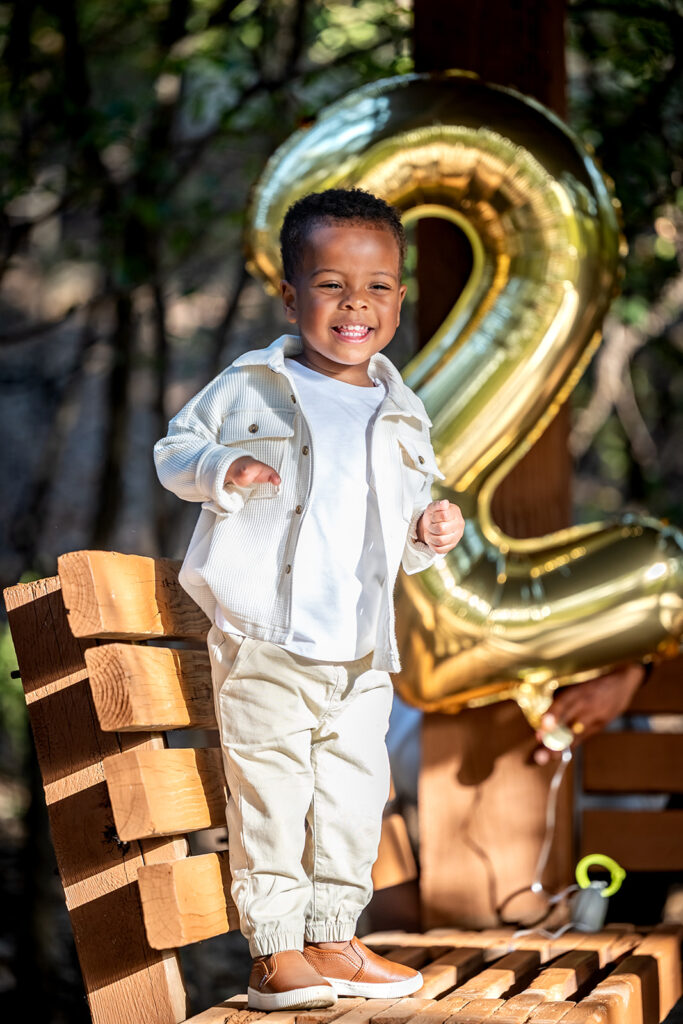
My son during his second birthday photoshoot. 
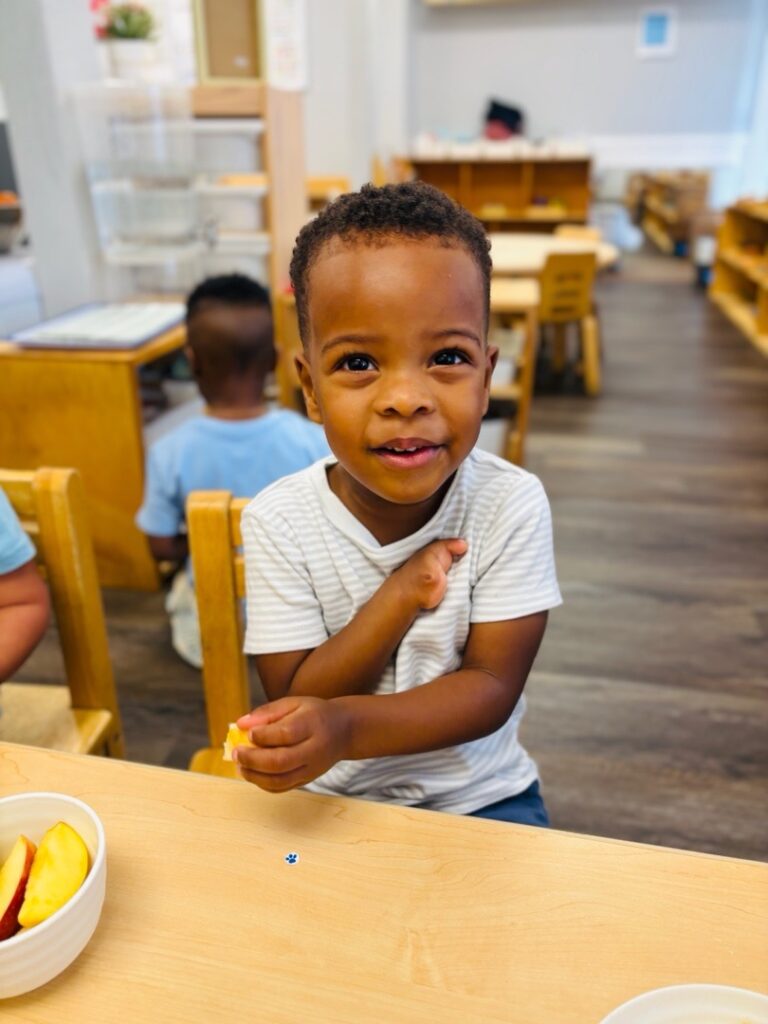
My happy man at school. 
My cooking partner!

April is Limb Loss and Limb Difference Awareness Month, and if I’m being honest, it’s a topic I didn’t know much about until the day that changed my life.
In 2023, my husband and I welcomed our beautiful baby boy. I’ll never forget the moments after he was born. As the nurses examined him, one walked over and said softly, “They must not have caught this on the ultrasound, but his right hand didn’t fully develop. He’s missing four fingers and only has a thumb.”
I never truly understood what it meant to have your “breath taken away” until that second. The first few weeks after he was born were a blur of confusion, sadness, questioning God, and a heavy, lingering shame that whispered this was my fault. The tears of joy I had imagined when becoming a first-time mom were replaced by tears of genuine heartbreak.
We eventually met with an orthopedic surgeon and learned our son was born with a congenital hand condition called Symbrachydactyly. It’s a rare congenital condition where a child is born with short, webbed, or missing fingers. It affects about 1 in 32,000 babies, and while there are hundreds of different congenital hand conditions, our son was now part of a community of 5.6 million Americans living with limb loss or limb difference (where someone’s arm or leg is shaped differently or missing).
The Reality of the “Different” Path
The tough reality is that symbrachydactyly isn’t genetic, and doctors can’t tell us why it happened. Most days, my son is the only child in the room who looks like him. As a mom, that’s a heavy space to navigate. I spent months worrying: How do I tell our friends? Will people only see his hand and not how beautiful he is? Will he be teased?
But as we’ve walked this path, I’ve realized that while awareness is growing, we still have a long way to go. We have a beautiful opportunity to support families like mine by changing the way we look at “different.”
What You Can Do To Support Those With Limb Differences
If you’ve ever wondered how to support the limb-difference community, here are a few ways to start:
- Educate with Kindness: Children are naturally curious, and that’s okay. By teaching our kids about limb differences early, we can minimize those uncomfortable stares or pointing. When we’re prepared, we can replace “What’s wrong with him?” with “We all have unique bodies.”
- See the Image-Bearer First: Whether someone uses a wheelchair or is missing fingers, they are made in the Image of God. You cannot imagine what parents of children with limb differences and even adults with limb differences can experience mentally and emotionally as they try to navigate how people see them or their child. We know that everyone has unique features, and we know it’s not uncommon for people to notice a physical difference, especially one that isn’t considered “normal.” When we treat everyone with dignity, we aren’t just being “nice”—we’re acknowledging their divine worth.
- Teach Inclusion: Differences aren’t “good” or “bad”—they just are. Help your kids understand that some friends might do things a little differently, and that’s something to celebrate, not fear.
- Support the Specialists: Places like Scottish Rite are lifesavers. Pediatric prosthetics and surgeries can cost thousands. If you’re looking for a place to give, organizations that support these families change lives.
- The Power of Prayer: Please don’t underestimate this. Since having my son, I’ve met many parents of children with limb differences and although the children are happy, resilient and show that they’re capable of beating the odds, none of this comes without challenges. Parents of children with limb differences have to navigate grief, worry, and fear as they want the best for their child while understanding that things may be harder for them. They have to be advocates at school, on the playground, and everywhere their child goes because the next “what happened to her hand?” or “why does he look like that?” is just around the corner. They have to consider if their child will need extra help when doing everyday tasks like dressing, brushing teeth or even riding a bike. Pray for the parents navigating the “grief cycle” and parenting. Pray for the children to be resilient and for their peers to be kind.
My son is now two and a half, and “my sweeta” is pure joy. He’s bright, he’s obsessed with music, and he constantly surprises us with how he uses both hands to conquer the world.
The “motherhood highs” are very real, but I’ll be transparent: they are still mixed with lows as we navigate this journey. There is still so much to learn, but I am so thankful God has allowed me to experience loving him and raising him.
My hope is that by sharing our story, we can all lead with a little more grace and consideration. When you see someone who looks different, remember that there is a whole journey of hidden hurdles and daily strength behind that person and their family that we may never fully see.





Thank you for this Article! At the age of eleven, I started helping my Aunt in taking care of her twin boys at six weeks old. It was several months later that they were diagnosed with Cerebral Palsy. I can still remember my Family grief and all the inside talking that went on. When I would be out with them and people would stare, I would make ‘crazy’ faces back to them or say something unkind, which I was quickly scolded by my Aunt. Keith and Kenneth love me and I LOVE THEM! I knew they were different, however we grew and learned together, and most of all loved each other, which contributed to the amazing extraordinary 60 year old men they are today, and still want to come over my house to dance, listen to music, and help me wash clothes!
Kylen is one of God’s extraordinary creation, just like Keith and Kenneth! The world of ignorance is missing out on knowing such amazing people! Thank you for your honesty, sharing your story. It will help others to understand that although different, we are all created in the image of THE ALMIGHTY GOD! Continue to inspire, educate, and share the love of GOD through your Ministry(Peculiar on Purpose)!
Thank you for reading and sharing your story about your cousins. They are blessed to have you, and so are we. Thank you for the words of life and encouragement you speak over my sweet baby!
Absolutely love my grandson! Love how honest your were/are as parents. I was in shock when I arrived at the hospital and learned of the news as well. I kept it together because that’s what mothers do. We are blessed to have him in our lives and here to support in anyway. The most beautiful part in all of this is that there isn’t a care in the world to him. He goes on to do what normal 2 year olds do! His joy is contagious and we love our Poohbear!!!
Thank you for reading and for loving and supporting my sweeta!